Understanding Roundabouts: A Driver's Guide
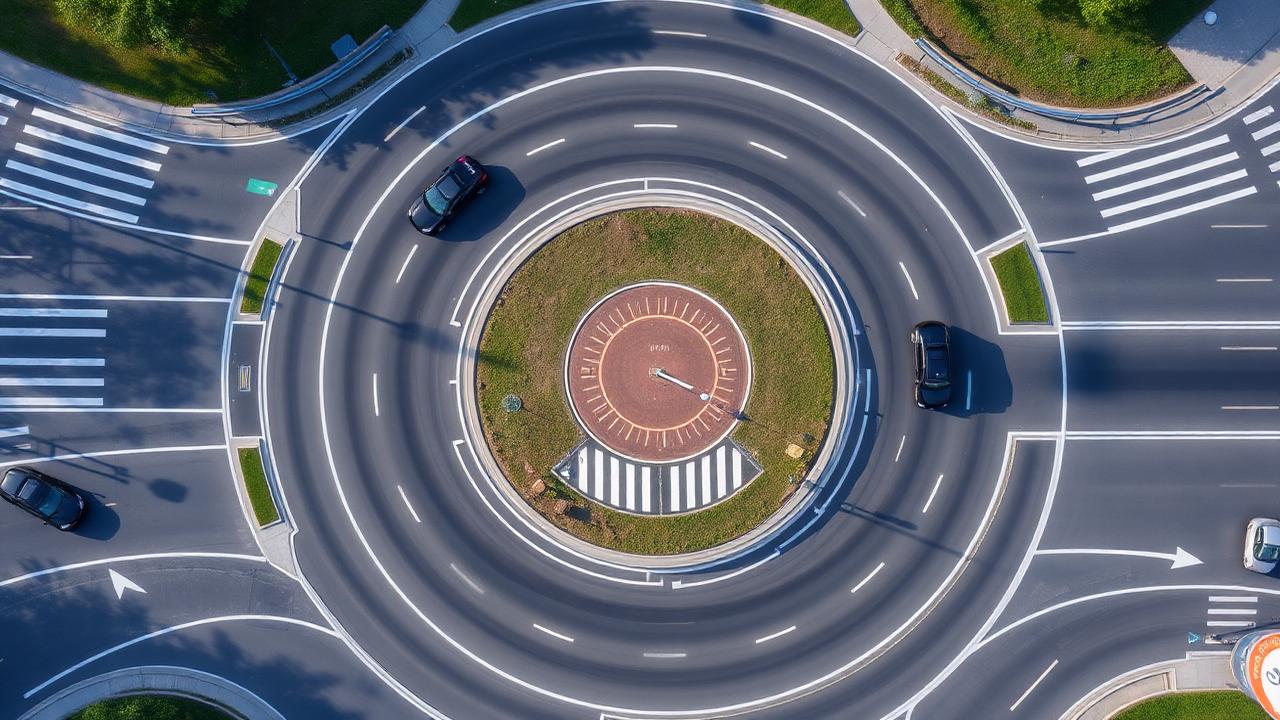
The U.S. has added more than 10,000 roundabouts in the last 20 years, and the FHWA reports they reduce fatal crashes by up to 90% compared with traditional intersections. The catch: a roundabout only works if drivers know the rules. Most don't.
The three rules that matter
- Yield to traffic already in the roundabout. Vehicles inside have the right of way. Wait for a safe gap, then enter.
- Go counter-clockwise. Always. Never back up, never make a U-turn against traffic.
- Signal your exit. Use your right turn signal as you approach the exit, not as you enter.
Single-lane roundabouts
The simple case. Approach at 15–20 mph, yield left, pick your gap, enter, signal right as you reach the exit before yours, exit. Don't stop inside the roundabout unless absolutely necessary.
Multi-lane roundabouts
Most accidents happen here, almost always because drivers picked the wrong lane on entry:
- Turning right or going straight? Use the right lane.
- Going straight or turning left? Use the left lane.
- Making a U-turn (going all the way around)? Use the left lane.
The signs and pavement arrows before the roundabout tell you the right lane choice. Read them as you approach, not as you enter.
Pedestrians, cyclists, and emergency vehicles
Pedestrian crossings sit at the entry and exit of each leg. Yield to anyone in the crosswalk. Cyclists may either ride through with traffic or use the sidewalk crossing. If you hear sirens while inside the roundabout, exit first, then pull over — don't stop inside.
Common mistakes
- Stopping when there's no traffic — yield does not mean stop.
- Changing lanes inside the roundabout — pick your lane before entry.
- Forgetting to signal the exit — the driver behind you can't predict your move.
- Entering too fast — design speed is 15–25 mph for a reason.
If roundabouts make you nervous, a short defensive driving course walks through several intersection types and gives you a mental model that transfers to every new intersection you'll ever see.