Winter Driving Tips for Southern Drivers
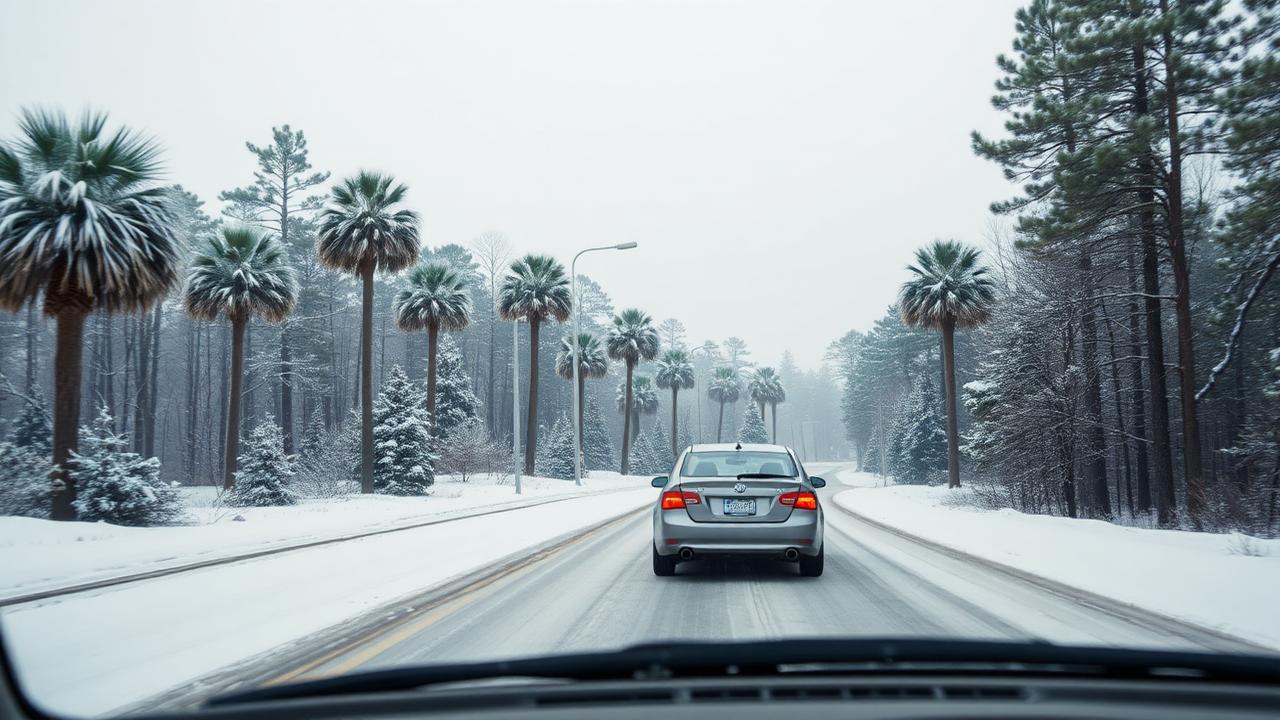
Drivers in the South face a unique winter problem: ice and freezing rain show up just often enough to be dangerous, but not often enough for anyone to get good at handling them. Cities like Houston, Dallas, Atlanta, and Orlando average less than one icy day per year — and when it happens, accident rates spike by 300–500%.
Before you go anywhere
- Check your tires. Tread below 4/32" loses meaningful grip on wet pavement and is dangerous on ice.
- Top up windshield washer fluid with a rated freeze-resistant formula. Standard fluid freezes around 32°F.
- Clear the entire windshield, all windows, mirrors, headlights, and the roof. Snow blowing off your roof can blind the driver behind you.
The black-ice rule
Black ice forms when temperatures hover near freezing and pavement is wet — usually on bridges, overpasses, and shaded curves, often before the rest of the road freezes. If the road looks shiny but isn't visibly wet, assume it's ice. Slow down well before the bridge, not on it.
If you start to skid
- Take your foot off the accelerator. Don't slam the brake.
- Steer in the direction you want the front of the car to go. If the rear is sliding right, steer right.
- Wait. Most skids correct themselves in under a second if you stop fighting the wheel.
Freezing rain and fog
Use low beams in fog — high beams reflect off water droplets and reduce visibility. Increase following distance from the usual 3 seconds to at least 6 seconds. If visibility drops below 100 feet, pull off the road completely, turn on hazards, and wait it out.
The single best habit
Just slow down. Most southern winter crashes happen because drivers maintain their normal 65–75 mph highway speed on roads that lost half their grip. Dropping to 45 mph adds maybe 8 minutes to a 30-mile commute and roughly halves your stopping distance. A defensive driving course walks through the physics and the muscle-memory drills that make this automatic.